
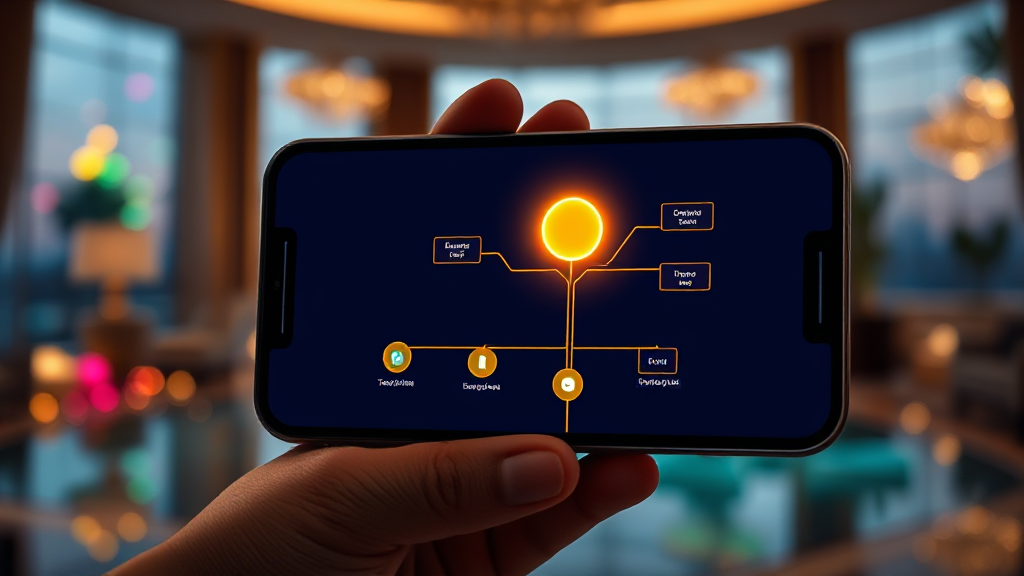
Every Choice You Make on wwwtk999 and Where It Leads
Nothing about wwwtk999 is one-size-fits-all. The platform itself is a single destination, but the experience you actually get depends almost entirely on which door you walk through first. Register today or register next month? Download the app or stay in the browser? Fund the account with a small first deposit or a larger one? Each of those looks like a minor preference on the surface, yet each one quietly routes you toward a different version of the same platform — different pacing, different friction, different habits, and eventually a different relationship with the whole thing.
This is not a sales pitch and it is not a warning. It is a decision tree. The point is to show consequences before you commit, so that when you tap a button on tk999 you already know roughly where that tap is going to lead you. Read the branches, pick the ones that match how you actually behave, and skip the ones that do not.
Decision 1: Register Now or Keep Browsing
The very first fork is the simplest and the most consequential. You can look at the platform as a guest, or you can create an account and become a real user. Guests get information; registered users get the actual experience.
If you stay a guest, the consequence is low commitment and low information. You can see what the platform is, form a rough impression, and leave without anything attached to your name. That is a perfectly reasonable branch if you are still comparing options. The cost is that almost everything meaningful — the account dashboard, the deposit flow, the app download, the actual gameplay — sits behind registration, so your impression stays shallow.
If you register now, the consequence is that the platform stops being a website and starts being your account. You get a login, a profile, and a place where your activity accumulates. That is useful if you already know you want to try it, and it is premature if you are still deciding. The honest rule: register when you are ready to act, not when you are merely curious. An account you never use is not neutral — it is a small open loop you will keep meaning to close.
Decision 2: App or Browser
Once you have an account, the next branch is how you reach it. tk999 offers a downloadable app, and it also works through a browser. These two paths feel similar for the first five minutes and diverge sharply after that.
The app branch leads toward habit. A downloaded app sits on your home screen, sends notifications if you allow them, and opens in one tap. The consequence is convenience — and convenience is exactly what turns an occasional visit into a daily reflex. If your goal is to check in briefly and often, the app is the shorter path. If your goal is to keep the platform at arm’s length so it stays a deliberate choice rather than a reflex, the app is working against you.
The browser branch leads toward intention. You have to type the address or find the bookmark, which adds a few seconds of friction. Those seconds are not a bug. They are a natural pause between wanting to visit and actually visiting, and for a lot of people that pause is the difference between a controlled hobby and an automatic one. Neither branch is wrong. They simply produce different users, and you should pick the one whose end state you actually want.
Decision 3: Small First Deposit or Large
Funding the account is where the decision tree gets real, because this is the branch that sets your baseline. A small first deposit and a large first deposit lead to two different psychological starting points, even on the same platform.
A small deposit leads to low pressure and slow learning. You can explore the interface, get comfortable with how things work, and make mistakes that cost very little. The consequence is that your early experience is educational rather than emotional. The trade-off is that small balances can feel limiting, and some users respond to that limitation by topping up impulsively — which quietly converts a careful start into a scattered one.
A large deposit leads to high engagement and high exposure. You will feel the platform more intensely, notice wins and losses more sharply, and probably learn faster in raw terms. The consequence is that your emotions scale with your balance. If you have not yet built the habits to manage that, the large-deposit branch can front-load pressure you were not ready for. The practical middle path — start small, prove your habits, then scale deliberately — is not the most exciting branch, but it is the one that most people who stay long-term actually took.
Decision 4: Treat It as Entertainment or as Income
This is the branch people rarely make consciously, and it is the one that shapes everything downstream. You can treat tk999 as entertainment with a cost, or as a source of income. Those two framings produce completely different behavior on the same platform.
The entertainment branch leads to boundaries. You decide in advance what the activity is worth to you, you treat losses as the price of the experience, and you stop when the budget is done. The consequence is that the platform stays in its lane. It is something you do, not something you rely on. Users on this branch tend to last longer and enjoy it more, precisely because nothing important is riding on any single session.
The income branch leads to pressure. Once you frame the platform as something that should pay you, every session becomes a test with a pass or fail, and a normal downswing starts to feel like a personal failure. The consequence is that you play tighter, chase more, and enjoy it less — while the platform itself has not changed at all. The branch is available to everyone, but it is the one most likely to turn a hobby into a stressor. Choose it only if you genuinely understand what you are signing up for.
Decision 5: Play Alone or With a Plan
By this point you are inside the experience, and the next fork is about structure. You can open the platform whenever the mood strikes, or you can approach it with a simple plan. The difference shows up over weeks, not minutes.
The no-plan branch leads to drift. Sessions happen when you are bored, stressed, or already thinking about it, which means your activity is driven by mood rather than intention. The consequence is unpredictability — some weeks heavy, some weeks absent, and no clear sense of whether the whole thing is still fun or has quietly become a habit you did not choose.
The plan branch leads to visibility. It does not need to be elaborate: a rough time limit, a rough spend limit, and a quick weekly glance at whether you stayed inside them. The consequence is that you always know where you stand, and small course corrections stay small. The trade-off is a little admin, which is exactly why most people skip it — and exactly why the people who do not skip it tend to be the ones still enjoying the platform a year later.
Decision 6: Stay Quiet or Set Your Own Exit
The final branch is the one almost nobody plans for, and it is the one that matters most. At some point you will either drift away from tk999 gradually, or you will decide in advance what your exit looks like. Those are very different endings.
The drift-away branch leads to ambiguity. You do not quit, you just fade — a few visits, then fewer, then none, with a lingering account and a vague sense that you might come back. The consequence is that the decision never really gets made, and the platform keeps a small claim on your attention indefinitely.
The planned-exit branch leads to closure. You decide up front what would make you stop — a spend ceiling reached, a time period elapsed, a change in priorities — and you treat that as a real boundary rather than a suggestion. The consequence is that you are always in control of the relationship, whether it lasts three weeks or three years. This is the branch that turns everything above it into a genuine choice rather than a slide, and it is the one worth deciding before you need it.
None of these branches is hidden, and none of them is forced. tk999 gives you the same six forks every other user gets, and the experience you end up describing to someone else is really just a report on the doors you chose. Pick them deliberately, and the platform stays a tool you use. Pick them by default, and it becomes something that happens to you. The difference is not the platform. It is the tree.